
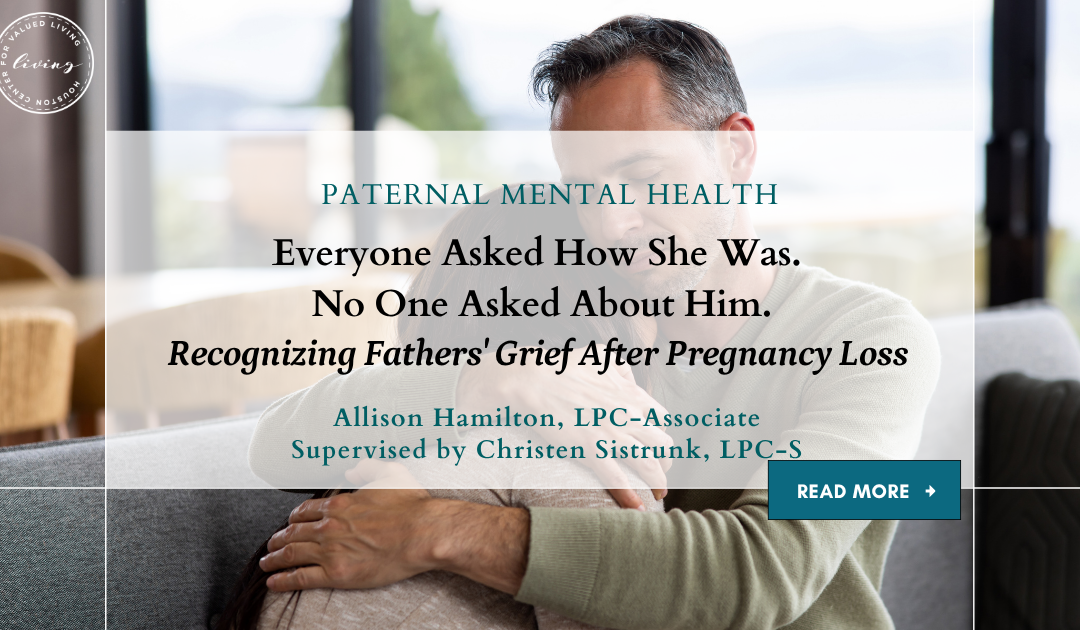
June is Men's Health Month, a time to raise awareness about men's physical, emotional, and mental well-being. It is also an opportunity to recognize an often-overlooked aspect of men's mental health: the grief many fathers experience after pregnancy loss.
When a pregnancy ends in miscarriage, stillbirth, or another form of pregnancy loss, the emotional impact extends beyond the person who was pregnant. Pregnancy loss affects fathers and non-birthing partners as well, many of whom experience profound grief. Yet their loss frequently goes unrecognized, leaving many men navigating what is often referred to as double disenfranchised grief: grief that is not fully acknowledged because of both the societal minimization of pregnancy loss and cultural expectations surrounding men's emotional experiences.
Although pregnancy loss is common (approximately 1 in 5 known pregnancies ends in miscarriage), many grieving fathers after pregnancy loss find themselves suffering quietly and alone
What Grieving Fathers After Pregnancy Loss Are Up Against
Men experiencing pregnancy loss often face unique challenges, including:
- Societal and cultural expectations to be strong, stoic, and focused primarily on supporting their partner.
- Limited recognition and validation of pregnancy loss as a significant loss for both parents.
- Messages that suggest a father's grief after miscarriage or pregnancy loss is secondary or less important.
- A tendency to seek professional or group support less often than women, resulting in fewer opportunities to process their loss.
- Workplace policies that may not provide adequate leave or support following pregnancy loss, leaving little time or space to grieve.

How Father Grief After Miscarriage or Pregnancy Loss May Show Up
Grief does not always look the same from person to person. Fathers may experience:
- Numbness or emotional disconnection.
- Guilt for not grieving as visibly or intensely as their partner.
- Grief related to the loss of hopes, dreams, and the future they imagined with their child.
- A sense of losing control over life and the future.Increased symptoms of anxiety, depression, or substance use.
- Withdrawal from friends, family, and social situations.
- Difficulty finding words for their experience or identifying what they are feeling.
Some fathers throw themselves into work or focus entirely on caring for their partner, unintentionally leaving little room to acknowledge their own grief. Others may feel pressure to "stay strong," making it even harder to ask for support.
How We Can Better Support Grieving Dads
One of the most powerful factors in healing is simply feeling seen and supported. Supporting fathers after pregnancy loss means recognizing that they, too, have experienced the loss of a child and the future they had imagined.
Friends, family members, coworkers, and helping professionals can make a meaningful difference by:
- Asking how they can help rather than assuming what is needed.
- Being willing to listen without trying to fix the grief.
- Spending time with grieving fathers and checking in over time.
- Acknowledging the baby and the significance of the loss.
- Validating that fathers grieve too.
- Providing resources about how to support a grieving partner while also caring for themselves.
- Avoiding minimizing statements such as, "Everything happens for a reason," or, "You can always have another baby."
At a broader level, continued research, increased public awareness, and workplace policies that recognize pregnancy loss as a significant family loss can help reduce the isolation many fathers experience. Recognizing that pregnancy loss affects fathers, not just mothers, is an important step toward creating a more compassionate culture.
Resources for Grieving Fathers
Support is available, and no one should have to navigate this loss alone.
- Postpartum Support International (PSI): Offers support groups, resources, and specialized perinatal mental health services. https://sharewellnow.com/psi-support-groups?group=grief-loss-support
- Sad Dads Club: Provides support groups, events, educational resources, and a community specifically for fathers experiencing reproductive and pregnancy-related loss. https://saddadsclub.org/
- Guys and Grief Podcast: Explores men's experiences with grief and offers practical insights for healing. https://guysandgrief.com/
- Individual Counseling: Working with a therapist who has specialized training and experience in perinatal mental health can provide a safe space to process grief, develop coping strategies, and navigate the unique challenges that can arise after pregnancy loss.
This Men's Health Month, we can support fathers by recognizing that their grief matters and is real, meaningful, and deserving of care. When we acknowledge and validate fathers' experiences after pregnancy loss, we help create space for healing, connection, and hope. If you or someone you care about is grieving a pregnancy loss, support is available. Reaching out for help is not a sign of weakness. It is a courageous step toward healing.

At Houston Center for Valued Living, Allison Hamilton, LPC-Associate (Supervised by Christen Sistrunk, LPC-S), specializes in grief therapy and loss counseling. Whether you’re anticipating the passing of a loved one or processing a recent death, therapy can help you build coping tools, find meaning, and move forward with compassion for yourself.