
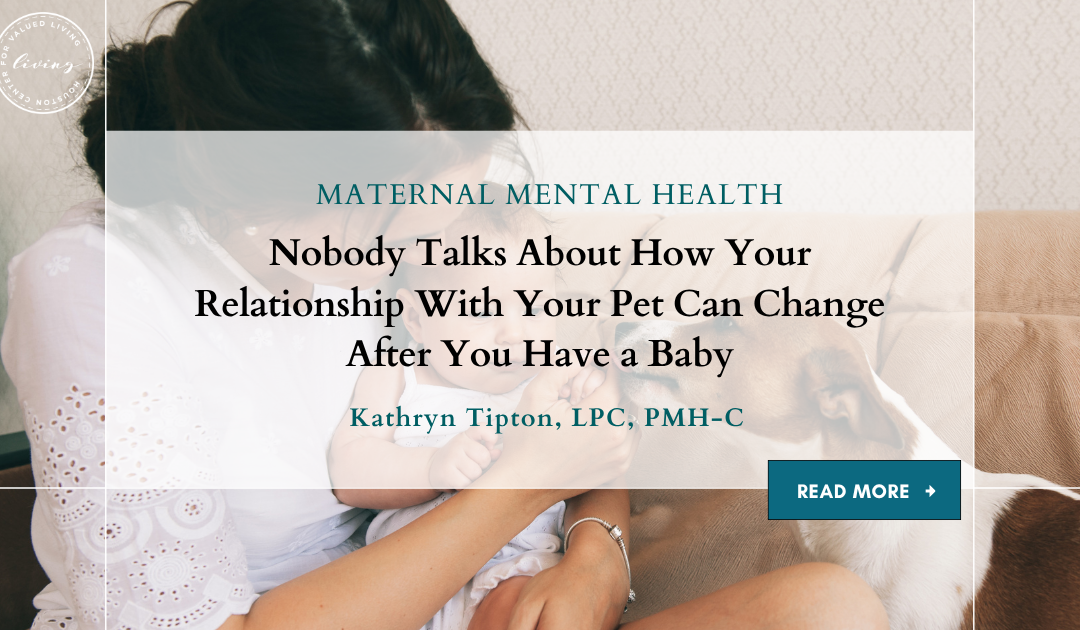
Before I had a baby, my cat was my baby. Her name was Pepper.
My phone was full of pictures of her. I noticed every little thing she did. I talked about her constantly. I spent time with her on purpose. We hung out together. She brought me comfort, companionship, and joy.
Then I had a baby, and suddenly everything changed.
I remember seeing my cat several weeks after giving birth and crying because I felt like our relationship had changed overnight. I felt guilty that I wasn’t spending time with her and she spent most of her time with my husband. I felt sad seeing her sitting nearby while I was constantly occupied with the baby. I also felt resentful in both directions. Sometimes I felt resentful that my baby needed so much from me that I had nothing left to give my cat. Other times I felt resentful toward my cat for needing something from me when my baby already needed everything from me.
Feeling pulled between two things I loved deeply was painful.
And honestly? Nobody had really talked to me about this before becoming a parent.
The Shift Can Feel Sudden and Emotional
For many people, pets are not “just pets.” They are family. They are emotional support, routine, companionship, identity, and comfort.
Before having children, your pet may have been at the center of your world. Your routines revolved around them. You took them places. You cuddled on the couch together. You had the time and emotional space to fully enjoy them.
Then a baby arrives, and overnight your attention is consumed by feeding schedules, sleep deprivation, recovery, diapers, crying, appointments, pumping, laundry, and trying to survive the day.
You may suddenly realize:
- You haven’t sat with your pet in days
- Someone else is now doing most of their care
- Their barking or meowing suddenly feels unbearable
- You feel irritated instead of affectionate
- You miss your relationship with them
- You feel guilty all the time
These feelings can feel incredibly confusing and shame-filled.

You Are Not a Bad Person for Feeling Annoyed by Your Pet
This is one of the hardest parts for many new parents to admit.
After having a baby, your pet may suddenly feel:
- Too noisy
- Too needy
- Too overstimulating
- Like one more thing needing something from you
You may feel touched out, emotionally depleted, or overwhelmed by constant demands. Sometimes postpartum life can feel like every creature in the house needs something from you at the exact same moment.
A barking dog during a contact nap.
A cat meowing while you finally got the baby asleep.
Dog hair everywhere when you already feel behind on everything.
A pet wanting attention when you haven’t even had a moment to yourself.
These moments can trigger irritation, frustration, or resentment.
That does not mean you stopped loving your pet.
It means your system is overloaded.
Postpartum Recovery Changes Everything
Recovery itself can dramatically change your relationship with your pet, especially in the early weeks.
If you had a C-section, difficult delivery, complications, or significant physical recovery, you may not even physically be able to care for your pet the way you used to. You may be stuck upstairs, confined to bed, limited in mobility, or simply too exhausted to engage the same way.
Sometimes a partner or family member temporarily takes over pet care responsibilities, and that shift alone can feel emotional.
You may look at your pet and think:
“They probably think I abandoned them.”
That thought can carry so much sadness and guilt.

The Grief Piece Nobody Talks About
Sometimes the strongest emotion is not annoyance. It’s grief.
Grief for the relationship you used to have.
Grief for the version of yourself who had more emotional space.
Grief for the routines and quiet moments you miss.
You may miss:
- Laying on the couch together
- Going on walks
- Taking your dog places
- Giving your pet your full attention
- Feeling emotionally connected to them
You may even feel devastated that your emotional reaction toward them has changed.
One of the saddest parts can be when your pet lovingly seeks connection and you realize you don’t have much left to give in that moment.
Your dog brings you a toy and you feel irritated instead of excited.
Your cat curls up beside you and instead of warmth you feel overwhelmed.
Your pet waits outside the nursery door and you suddenly want to cry.
That disconnect can feel heartbreaking.
Even Thoughts Like “I Wish I Didn’t Have a Pet” Can Happen
This is another thought many parents have but are terrified to say out loud.
When you are severely sleep deprived, hormonally depleted, overwhelmed, overstimulated, and constantly caregiving, your brain may start searching for ways to reduce demands.
That can sometimes sound like:
- “Everything would be easier without a pet.”
- “I can’t handle one more thing needing me.”
- “I wish things were simpler.”
- “I miss when life felt manageable.”
Having these thoughts does not make you cruel or heartless.
Thoughts are not actions.
Temporary overwhelm is not the same thing as not loving your pet.
Many loving, devoted pet owners experience these thoughts during postpartum adjustment.

Your Pet Is Adjusting Too
Pets often notice that life has changed.
Their routines are disrupted.
Attention shifts.
The house sounds different.
People smell different.
Sleep schedules change.
Some pets become clingier. Others act out. Some become louder or more anxious.
And while understanding this can increase compassion, it can also increase guilt because now it feels like everyone is struggling.
This Does Not Mean the Bond Is Gone Forever
One of the biggest fears parents can have is:
“What if I never feel the same way about my pet again?”
But postpartum is often a season, not a permanent emotional state.
When sleep slowly improves…
When routines become more predictable…
When your body heals…
When you no longer feel in survival mode…
Many people find themselves reconnecting with their pets again.
Not always in the exact same way as before, because life genuinely has changed, but often with renewed closeness, affection, and emotional space.
The early postpartum period can be incredibly consuming. It makes sense that relationships, energy, and attention shift temporarily.
Gentle Reminders for New Parents
- You are not a bad pet owner for struggling emotionally after having a baby.
- Loving your baby deeply does not erase grief for your old routines and relationships.
- You can love your pet deeply and still feel overwhelmed by their needs right now.
- Temporary emotional distance does not mean the relationship is ruined forever.
- Your health and well-being matters too.
Practical Ways to Support Yourself and Your Pet
Sometimes the goal during postpartum is not perfection. It’s support.
Some things that may help:
- Hiring a dog walker temporarily
- Using pet daycare occasionally
- Asking a partner or family member to take over some responsibilities
- Lowering expectations for yourself
- Finding small moments of connection instead of trying to recreate your old routines immediately
- Reminding yourself this season is temporary
Sometimes five quiet minutes petting your dog while the baby naps is enough for now.
If You’ve Felt This Way, You’re Not Alone
This topic is rarely talked about openly, which leaves many parents feeling ashamed and isolated.
But struggling emotionally with the shift in your relationship with your pet after having a baby is far more common than people realize.
It does not mean you are a bad parent.
It does not mean you are a bad pet owner.
And it does not mean you love either one any less.
Sometimes it simply means you are adjusting to one of the biggest identity and lifestyle shifts a person can experience.

Kathryn Tipton, MA, LPC, PMH-C, is a licensed therapist and co-founder of The Houston Center for Valued Living. She specializes in reproductive mental health, insomnia, and anxiety treatment, helping clients navigate life’s hardest moments with clarity, compassion, and evidence-based tools.