
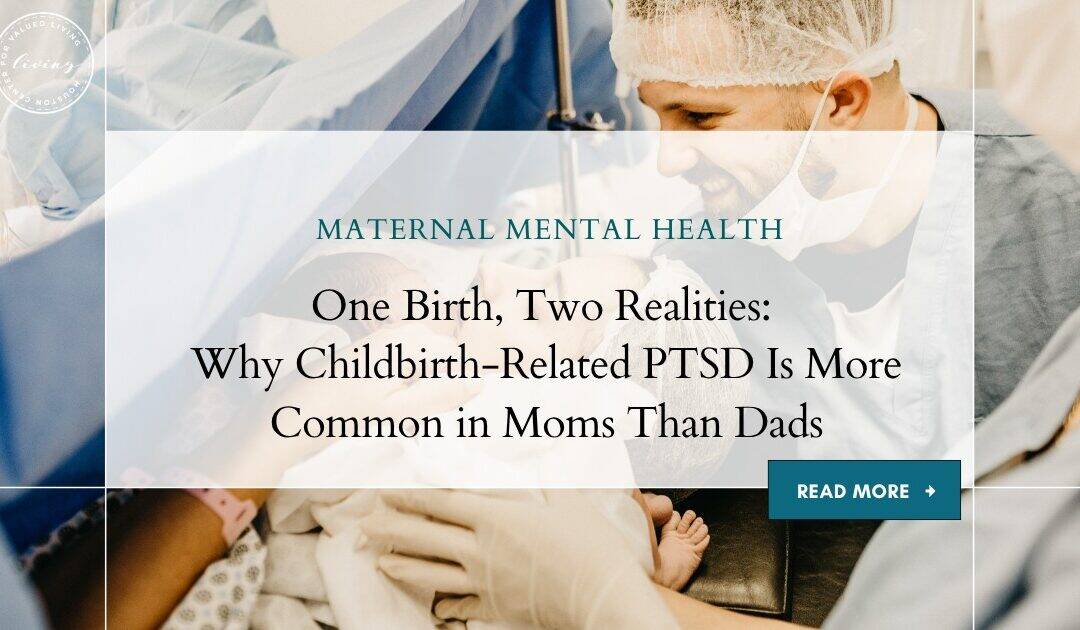
A new study published in May 2024 in the Journal of Reproductive and Infant Psychology caught my attention—mostly because it confirms something I see all the time in therapy: childbirth can be traumatic, and the emotional impact on moms is often overlooked or minimized.
The study, titled “One birth, two experiences”, found that 4.7% of mothers meet criteria for childbirth-related PTSD (CB-PTSD), compared to just 1.2% of fathers. That’s nearly a fourfold difference.
Exploring the Disparity
Why such a big gap? The researchers propose a few explanations.
Some are what you might expect: mothers go through the physical experience of childbirth, including pain, risk, and medical interventions. But the difference isn’t just about physical trauma. The study points to deeper, more systemic issues: gendered expectations, societal norms, and the emotional labor placed on mothers.
Mothers are often cast as the “primary” parent before the baby even arrives, and this role solidifies immediately after birth. The baby becomes the focus – everyone wants to know how baby is sleeping, eating, growing. Meanwhile, moms are expected to bounce back, figure it out, and keep going. Even when a birth was traumatic, it’s often brushed aside with comments like, “Well, at least the baby is healthy.”
As the authors put it, “gendered representations of parenthood” may protect fathers from some of the same psychological vulnerabilities, even when they were present for the birth.

My Perspective as a Therapist
What really resonated with me in reading this article is how few people have the chance to actually process what they’ve been through after giving birth.
For so many of my clients, the experience is: you have the baby, and then boom – you’re instantly in the thick of parenting. You’re troubleshooting feedings, managing sleep deprivation, and trying to learn this brand-new little human… all while recovering from major physical and emotional upheaval. There’s barely time to sit down, let alone process what just happened.
Even when someone asks how the birth went, it’s usually answered in shorthand:
“It was rough, but we’re okay.”
“I had a C-section. It was unexpected.”
“There were some scary moments, but the baby’s healthy.”
Behind those quick summaries are often complicated emotions – fear, helplessness, grief, guilt, disappointment. And because we’re so focused on the baby, and on “moving forward,” those feelings can go unspoken and unprocessed.
What Does CB-PTSD Look Like?
Childbirth-related PTSD can include flashbacks, intrusive memories, nightmares, hypervigilance, and emotional numbness. It might show up as irritability, anxiety, or difficulty bonding with the baby. And it doesn’t always look dramatic. Sometimes it’s just a quiet sense of unease that won’t go away.
It’s not about being “ungrateful” or “overly sensitive.” It’s a valid response to a distressing experience and it deserves attention.
Therapy Can Help
One of the most healing things we do in therapy is create space for someone to tell their story. Sometimes it’s just talking it through, piece by piece. Sometimes it’s journaling or naming the emotions that come up. Sometimes it’s doing deeper trauma work like Accelerated Resolution Therapy (ART) to gently process the most distressing images or moments.
There’s no single “right” way to heal from a traumatic birth, but there are so many ways we can begin.
What matters is this: your story matters. Your experience matters. And even if everyone else has moved on to how the baby’s doing, you deserve support, too.
If you’re finding yourself struggling with memories of your birth experience, know that you’re not alone. Therapy can be a space to untangle what happened and begin to heal. Reach out if you want to talk.

Kathryn Tipton, MA, LPC, PMH-C, is a licensed therapist and co-founder of The Houston Center for Valued Living. She specializes in reproductive mental health, insomnia, and anxiety treatment, helping clients navigate life’s hardest moments with clarity, compassion, and evidence-based tools.
Other posts written by Kathryn:
- Why am I so angry? Understanding postpartum rage.
- The Problem with Positive Vibes: How Toxic Positivity Harms New Moms
- Clean Pain vs Dirty Pain: How We Multiply Our Suffering Without Even Realizing It
- Preparing for Hurricanes and Power Outages: A Guide for Nursing Moms and Families in Houston
- An open letter to the mother who is struggling to love motherhood.
- To the Mother Who is So “Done” at the End of the Day
- An Open Letter to the Mother who Feels Guilty for Taking a Break
- Your “Judgy” Mom Mind Isn’t the Problem