
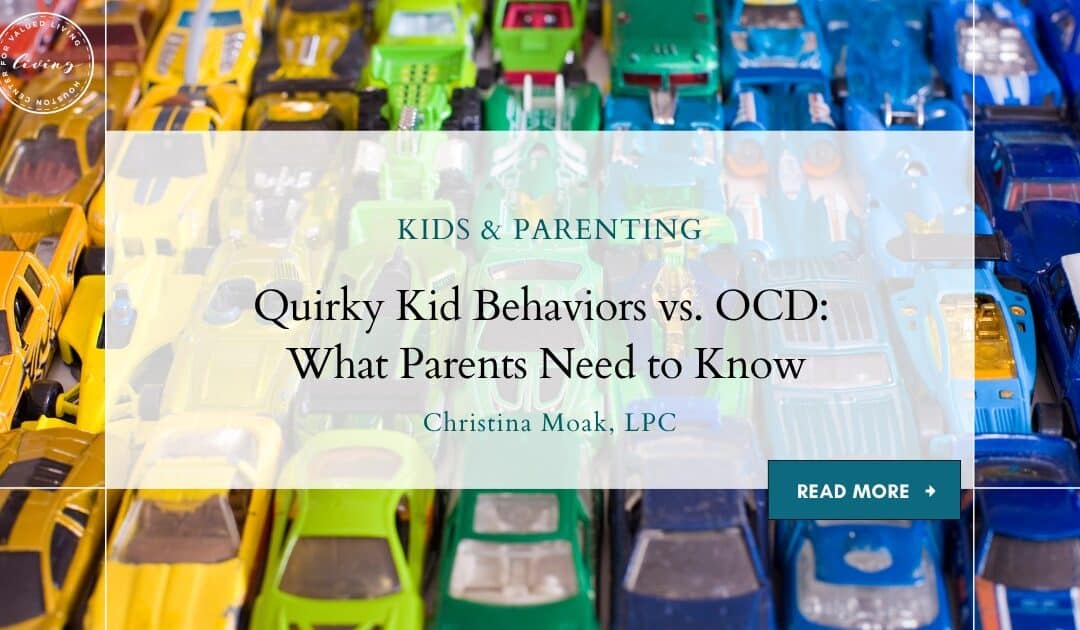
If you’ve ever watched your toddler line up their toy cars in perfect rows, insist on wearing the same pair of shoes every day, or meltdown when the bedtime routine changes, you might have wondered: Is this just normal kid behavior…or something more?
As parents, we all want to understand what’s typical and what might signal a bigger concern. The truth is, many of the behaviors that look like obsessive-compulsive disorder (OCD) in adults or older children are actually very common and very normal in young children.
Why Children Love Sameness
Young children thrive on predictability. Routine and repetition help them feel safe in a world that can otherwise feel big and unpredictable. This is why:
- Your preschooler might line up cars or stack blocks—not because they’re “compulsive,” but because sorting and order are part of how they play and learn. Fun fact: Learning to stack blocks is actually a developmental milestone for toddlers.
- Insisting on the same pajamas or cup isn’t necessarily OCD, it’s comfort. Favorites are a normal part of early childhood.
- Getting upset when a routine changes is also developmentally appropriate. Children this age rely on structure to feel secure.
These “quirks” are often simply signs of your child’s growing brain trying to make sense of the world.
When It Might Be More Than Typical
So when do these behaviors cross the line from normal development into something that might need extra attention? Professionals typically look for a few key differences:
- Time and intensity: The behaviors take up a significant amount of your child’s day, leaving little room for play or interaction.
- Distress: Your child isn’t just disappointed when routines change they’re extremely distressed, anxious, or unable to calm down.
- Interference: The behaviors make it hard for them to participate in everyday activities, like getting dressed, going to school, or enjoying playdates.
- Rigidity: Rather than growing more flexible with age, your child’s insistence on sameness is becoming more severe.
It’s important to remember that OCD is more than “liking things a certain way.” It involves intrusive worries or fears, followed by repetitive behaviors that the child feels must be done to prevent something bad from happening or to relieve overwhelming anxiety.
Trusting Your Gut as a Parent
Parents know their children best. If you notice that your child’s need for order, rituals, or repetitive play is causing them distress or it’s making daily life harder for your family, it may be time to check in with a professional. Early evaluation doesn’t mean a diagnosis; it’s simply a way to get more information and peace of mind.
Takeaway
Most of the time, a child’s quirks are just that, quirks. Lining up cars, sticking to favorites, or resisting a change in schedule is a healthy, normal part of early childhood development. But if those behaviors become overwhelming, rigid, or interfere with your child’s ability to enjoy life, reaching out to a counselor or pediatrician can help.
Remember: Seeking help doesn’t mean something is “wrong” with your child it’s about making sure they have the right support for where they are developmentally.

Christina “Nina” Moak, MA, LPC, is a Licensed Professional Counselor at The Houston Center for Valued Living. Nina specializes in helping parents navigate work-life balance, parenting challenges, and evolving family dynamics. She is passionate about fostering strong parent-child relationships and supporting individuals through life’s transitions.